
關注國際醫療人道救援的重要資訊,了解無國界醫生在各地的工作,接收最新活動消息與緊急報告,知道更多參與和協助的訊息。
From Training to Action: 2025 MEDICS training
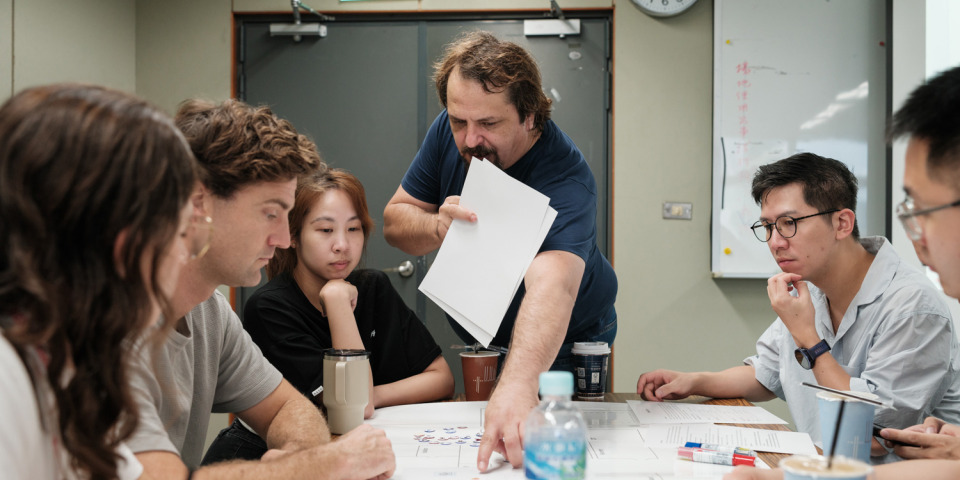
2025 MEDIC Training. © MSF TW
What is MEDICS Training
MEDICS (Multi-disciplinary Enhanced Deployment in Critical Surgical Care) is MSF's International Surgical and Emergency Response Training. MSF delivers medical care in contexts of armed conflict, natural disasters, epidemics, and infectious disease outbreaks. To ensure medical professionals are well prepared before being sent to low-resource and highly challenging environments, MSF provides relevant training including MEDICS. The training reflects MSF's commitment to delivering high-quality medical care to people in need.
The most recent six-day MEDICS training took place in Taiwan from October 6 to 11, 2025, bringing together 25 medical professionals from 13 countries and regions. Participants represented a wide range of specialties, including emergency medicine, critical care, intensive care, surgery, obstetrics and gynecology, and anesthesiology.
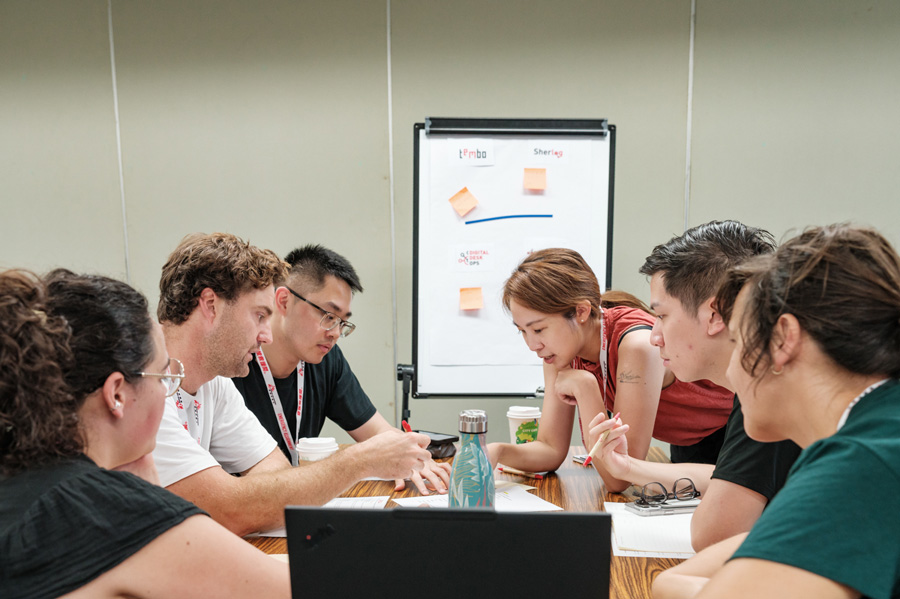
"The training helps participants gain a more comprehensive understanding of MSF as an organization. Without this preparation, you might not fully realize that MSF runs projects in more than 70 countries worldwide." says MSF Obstetrics and Gynecology Referent Dr Séverine Caluwaerts.
The core objectives of MEDICS training
MEDICS training fosters both the technical skills and psychological preparedness required for medical work in a humanitarian setting. Participants learn to transform individual expertise into collective strength, particularly in situations where effective teamwork is essential to saving lives, and benefit from exchanges with experienced facilitators who have worked in MSF projects. The training reflects MSF’s commitment to delivering high-quality medical care to people in need.
“If I had taken this course before my assignment, I think I would have felt more confident”, shares emergency doctor Shang-Kai Hung, who worked in Gaza in 2023. “The facilitators repeatedly emphasized that in many projects, we work with extremely limited resources. What truly saves lives are often the most fundamental principles.”
What does the curriculum include?
The MEDICS curriculum combines both theory and hands-on practice. Drawing on their own MSF experience, facilitators share the challenges encountered in different contexts and group discussions help participants better understand how MSF works. The training encourages two-way dialogue and respect for diverse perspectives.
MEDICS training also extends beyond clinical skills to include broader reflections on humanitarian practice. “One of the most challenging components was the ethical case discussions early in the course. They forced all of us to reflect on the difficult ethical dilemmas we may face when responding to emergencies in the field”, says anesthesiologist David Rawson.
The mass casualty simulation
On the final day of the training, participants take part in a mass casualty simulation, providing an opportunity to put their learning into action. Teams work together to manage 16 patients transferred to a hospital following a simulated bomb explosion in an urban setting.
Volunteer actors, using realistic moulage (mock injuries or wounds), portray patients with a range of traumatic injuries. And participants not only took on medical roles providing care across the different triage zones—red, yellow, green, and blue—but also played non-medical roles, including mass casualty incident coordinator or logistics coordinator.
Triage color categories:
- Red: Emergency cases requiring immediate intervention.
- Yellow: Urgent cases, where treatment can be delayed but requires close monitoring.
- Green: Non-urgent cases.
- Blue: Cases requiring care beyond available capacity or palliative services.
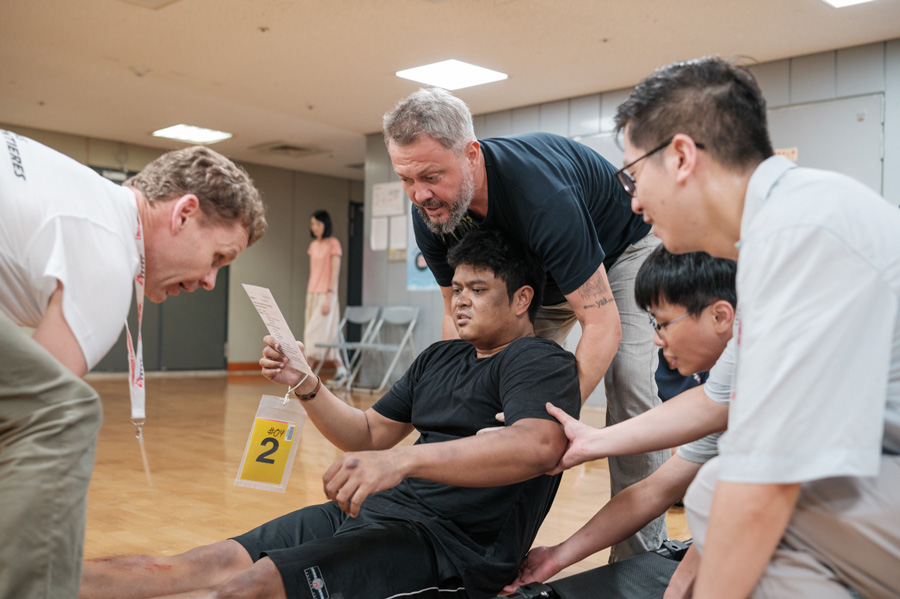
Throughout the simulation, coordinators ensure clear decision-making, while medical teams apply their training in real time. Through communication and collaboration, participants experience how effective teamwork enables appropriate care delivery and ensures that patients are directed to the correct treatment areas. The exercise concludes with a debrief for both participants and actors to identify lessons learned and how to improve future real-life responses.
“By strengthening clinical practice and team coordination, the MEDICS training accelerates the safe integration of teams”, explains MSF Surgical Care Referent Dr Shazeer Majeed. “These simulations help build trust within the team, enabling cohesive action during real-life emergencies.”
As this was the second time the MEDICS training was held in Taiwan, elements of the curriculum were adjusted based on previous experience. Christelle Plumier, MSF’s staff pool manager for surgeons, anaesthesiologists, gynaecologists, and epidemiologists, noted “We decided to adopt a more interactive and group-based approach. This not only brings more energy to the training, but also strengthens team spirit and collaboration.”
Surgeon Tzu-Hsuan Wang described the course as a clear and practical framework that distills frontline realities, enabling new staff to transition quickly into how MSF project teams work. “You will still feel nervous before your first assignment, but preparing yourself mentally, doing what you can to get ready, and working with people from different cultures and professional backgrounds helps you make the best possible decisions in the moment. Being able to give patients even a little more time, and to witness moments of human resilience, is deeply meaningful.”
Anesthesiologist Stephanie Lubin from Haiti offered this message to medical professionals considering joining MSF: “Joining MSF is a wonderful experience. You will find people who support your growth, while also allowing you to further develop your skills.”