
關注國際醫療人道救援的重要資訊,了解無國界醫生在各地的工作,接收最新活動消息與緊急報告,知道更多參與和協助的訊息。
Finding the "Right People": HR Team Collaboration in Recruitment and Matching
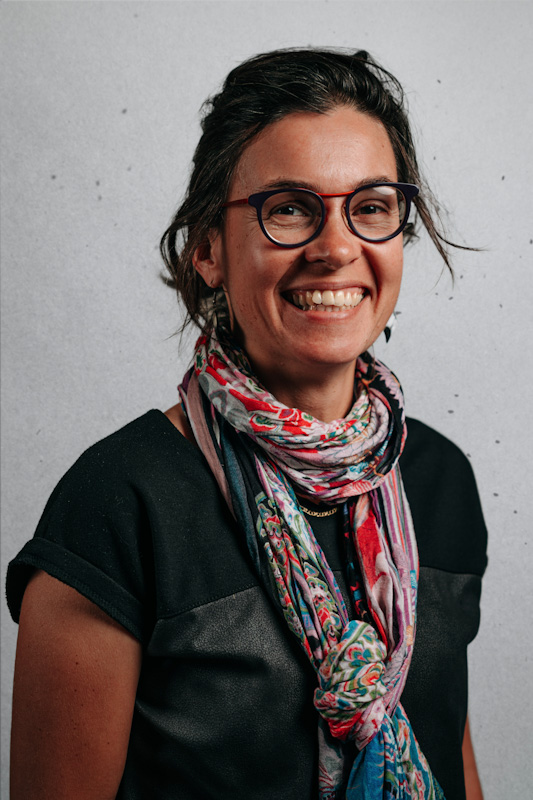
On the frontlines of humanitarian work, the success of every medical mission depends on the effective operation of the human resources system behind it. How does Médecins Sans Frontières (MSF) recruit, match, and support its professionals for projects? This interview features Christelle Plumier, HR Manager for Surgery, Anesthesia, Obstetrics and Epidemiology at the Brussels Operational Centre, who shares her practical experience from the field to headquarters.
From Finance to the Field: The Making of an HR Manager
An Unexpected Beginning
In 2005, at a market fair, Christelle encountered an MSF booth. The staff member happened to be from the office's HR department, and they struck up a conversation: "No, no, we don't just need doctors—there's an entire system operating behind the scenes." This encounter became a turning point. The following year, Christelle left her job in banking to undertake her first mission in Somalia as a finance and administration officer. However, she was responsible not only for finances but also for complex human resources management. She candidly recalls: "They sent me to do human resources—it was crazy, I had no idea what I was supposed to do."
In Somalia's high-risk environment with armed conflict, she quickly realized that any mishandling of human resources could have devastating impacts on team morale and the entire project. This baptism by fire made her deeply understand that HR on the frontlines is far from mere administrative work—it is the core lifeline that maintains team operations and ensures project success.
The Determination to Deepen Expertise
After her first mission, Christelle clearly recognized that she was approaching life-and-death issues with a passionate heart. This sense of responsibility prompted her to reflect: "I spent many years studying for financial work, but for human resources, I have no academic background." This awareness of professional rigor became her motivation to return to Belgium for further education, hoping to be better prepared for her next mission.
Shifting Perspectives: From Field to Headquarters
Christelle's perspective underwent a profound transformation in 2013 when she served as HR Coordinator in Malawi. The team faced chronic staff shortages, and whenever they requested support from headquarters, they often heard "We don't have anyone to send." This sense of powerlessness and frustration left her puzzled about headquarters.
It was this experience that prompted her to apply for the HR Manager position at the operation center in 2018, aiming to deeply understand "why it was so difficult" and work to improve the communication gap between field and headquarters. Today, this experience serves as a reminder in her work: "When we don't have people, I try not to say that to the field. I explain and try to help find other solutions, because I know when you're feeling desperate in the field, that's the last thing you want to hear."
The Team-Based Recruitment Model
Many people mistakenly believe that MSF staff deployment is decided by a single manager, but Christelle emphasizes that it is entirely a rigorous "team exercise." This process is the cornerstone of MSF's risk management, using collective wisdom to counter the blind spots that single-person decision-making might produce.
Key Players
Staff deployment decisions involve the following roles working together:
- Technical Advisors: Assess whether applicants' technical capabilities, clinical experience, and procedural proficiency meet MSF standards
- HR Managers:Receive field requests, conduct precise matching within the global talent pool, ensuring candidates possess both technical hard skills and mission compatibility
- Field Teams:Submit requirements and hold final decision-making power, as they best understand local culture, security situations, and specific project challenges
Context Is Everything
Christelle cites a case to illustrate the importance of contextual understanding. Once, Kunduz, Afghanistan needed a plastic surgeon with specialized skills to handle burns, perform flap grafts, and other specific surgeries. We had a candidate with an excellent resume, but she had served in the military and was deployed to Afghanistan. Headquarters might only recognize this as a "potential" issue, but the field team, based on their deep grasp of local political sensitivities, immediately identified it as a clear risk and decisively rejected the candidate.
Christelle concludes: "If someone succeeds in a mission, it's the result of teamwork." From recruitment review and technical verification to final confirmation, every step is credited to collective wisdom.
Beyond the Resume: Balancing Expertise and Character
Does a perfect resume equal a perfect aid worker? Based on MSF's over 50 years of experience working on the frontlines, the answer is no. When professional skills meet extreme pressure, "personality traits" become the key to success or failure.
Short-Term Missions: Technical Priority
For short-term missions lasting about a month, the primary consideration is very clear: can the candidate immediately provide the required specialized technical expertise to solve the most urgent technical problems in a short time?
Long-Term Missions: The Importance of Character
In missions lasting three to six months or longer, the importance of personal traits rises sharply, becoming equally important as professional skills. MSF particularly emphasizes evaluating:
- Adaptability:Quick adjustment in resource-scarce, culturally diverse environments
- Flexibility:Willingness to step out of professional comfort zones and undertake work beyond their scope of responsibility
- Open-mindedness:Respecting and learning local culture rather than imposing one's own standards
- Team Spirit:Aid workers need to live and work with colleagues around the clock and support each other; harmonious coexistence is crucial
Empowerment, Not Replacement
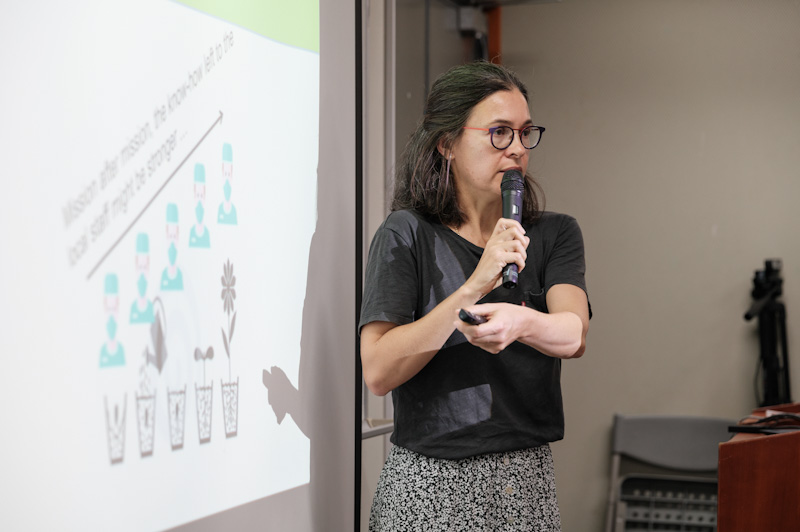
Christelle emphasizes that the deeper mission of MSF international field staff is not only to perform work themselves but, more importantly, to empower local staff, ensuring projects continue to operate after international personnel leave. She uses a vivid metaphor to explain: "Plant a seed and let it grow."
Human Resources in Emergency Response
Sudden emergencies are the most severe test of MSF's human resources system. Christelle's experience demonstrates the team's collaborative effectiveness in high-pressure environments.
Global Cooperation and Solidarity
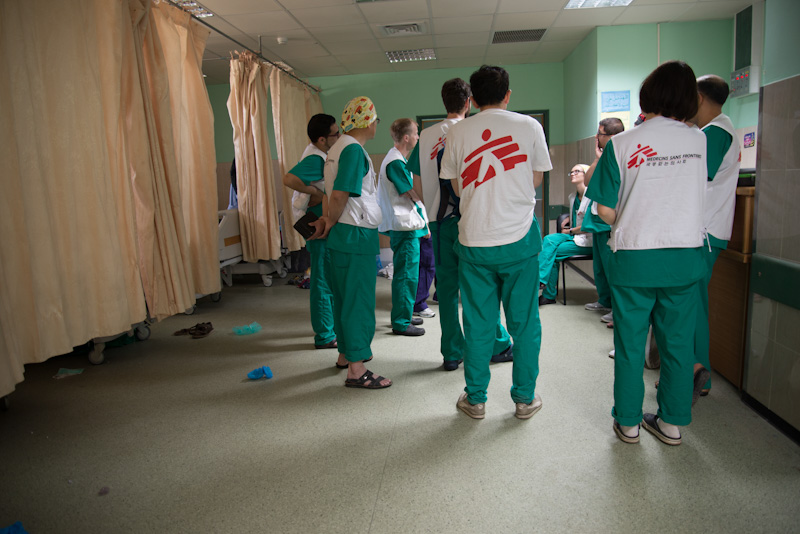
In 2018, shortly after taking office, Christelle faced the mass casualty incident triggered by Gaza's "Great March of Return." Emergency medical needs poured in like snowflakes, requiring large numbers of specialists in plastic surgery, vascular surgery, orthopedics, and more. MSF offices globally mobilized instantly, with offices from Taiwan and Hong Kong to Sweden all working to find talent. Many experts even proactively contacted MSF to express their willingness to help. Christelle felt this tremendous momentum: "All teams are working with you toward the same goal."
The Dilemma of "First-Timers"
Whether to deploy newcomers in emergency situations is a difficult balance. The field prefers experienced personnel, but the organization must also cultivate future talent. MSF typically adopts a flexible strategy: prioritizing senior staff in the first waves, inserting newcomers once the situation stabilizes, or ensuring newcomers work alongside experienced medical coordinators.
People-Centered, United in Mission
Christelle's insights reveal the core spirit of MSF's human resources management—far from being a cold administrative process, it is a support system rooted in collective wisdom and human compassion.
This system has two important keywords: teamwork and empathy. The former is the foundation of decision-making, ensuring that expertise, context, and needs are comprehensively considered; the latter is the lubricant, making headquarters support not a distant command but an empathetic helping hand. Driving all of this is the shared goal of serving patients.
As Christelle says: "You are never alone." At MSF, whether field staff in dangerous situations or support staff far away at headquarters, there is always a strong support network behind them. It is this people-centered spirit of united mission that supports MSF in continuing to provide medical assistance to those most in need in the world's most challenging places.